The first photo earns the click. The rest of the set earns the sale. Supplier photos usually lose both.
Picture this: you picked a decent product, the ads are running, and a buyer clicks through to your listing. The main image is the one the factory sent: grey background, a faint watermark, product tilted at an awkward angle. The buyer scrolls past. You still pay for the click, and the order goes to the listing next to yours with the clean white-background shot.
In ecommerce, nobody can touch the product. The photos are the product. The main image decides your click-through rate in search results and ad slots; the supporting images decide what happens after the click. Together they decide whether your ad spend comes back as profit or burns. Product photography is also one of the cheapest links in the whole chain, and the one new sellers most often settle on with factory snapshots.
This guide covers what a sellable set of ecommerce product photos actually contains, how a “real shot plus AI” workflow runs end to end, and how to get your first set from $30.
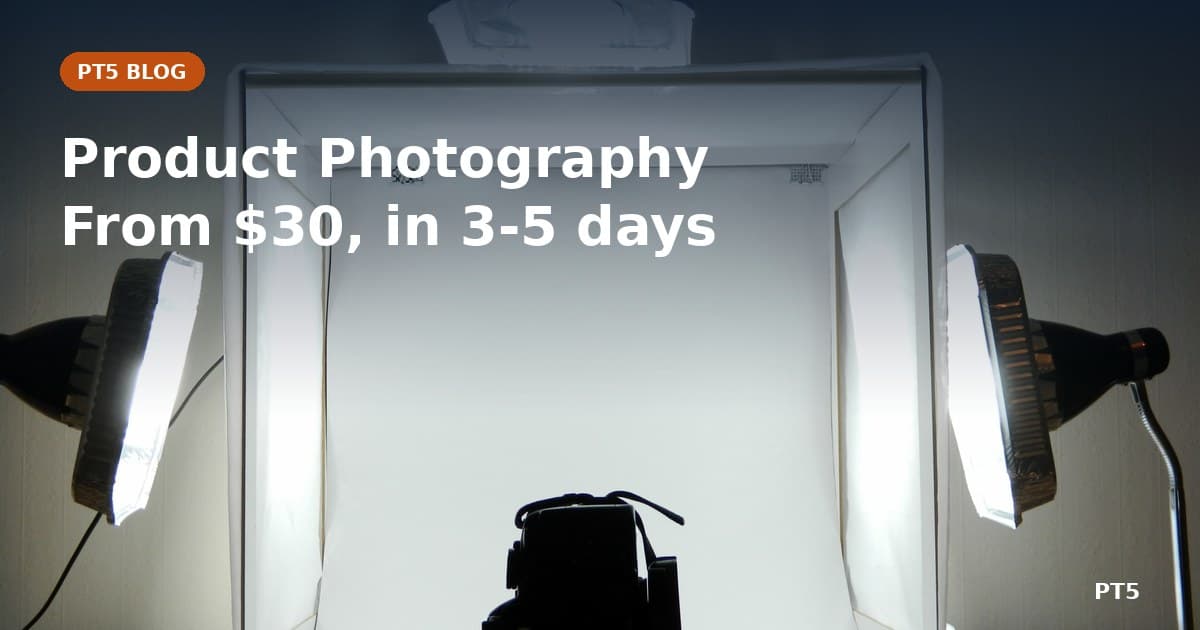
Photo: Alison Christine / CC BY 2.0 / via Wikimedia Commons. Cropped and resized.
Why factory photos don’t make the cut
The photos suppliers hand over fail in predictable ways:
- Grey or cluttered backgrounds, which do not meet main-image requirements on the major platforms.
- One angle only. No scene, no size reference, no way for a buyer to picture the item in their own life.
- The same 1688 photos are reused by a large number of sellers, so your listing looks identical to your competitors’ and the only thing left to compete on is price.
- Every selling point is buried in the title and description text. Without infographic images to carry them, almost nobody reads them.
You are not buying photos when you pay for product photography. You are buying the click and the conversion that the factory snapshots throw away.
The three images every listing needs

A listing image set is not “a few nice pictures.” Three types of image do three different jobs.
1. The white-background main image
Pure white background, product filling the frame, no text, no watermark, no props. This is the image shown in search results, in ad slots, and as the first photo on the listing. It directly decides the click-through rate. Platforms such as Amazon enforce strict main-image rules (covered below), and this one photo has to be a real photograph of the actual product. It cannot be generated from scratch by AI.
2. Lifestyle and scene images
The product in a real setting: on a kitchen counter, on a desk, worn or held by a model. These go in the secondary slots, on your store homepage, and in social and ad creative. They answer the buyer’s real question: what does this thing look like in my life, how big is it, how do I use it? Scene images can be generated by AI from the real base photo at a fraction of what a staged photoshoot costs.
3. Infographic images
Product photos with callouts: dimensions, materials, feature points, what’s in the box, how-to steps. These live in the secondary image slots and in the middle of a Shopify product page. They turn specifications and selling points into something visible, replacing the wall of description text nobody reads. Infographics are also built from the real photo with AI layout work.
A complete, sellable set is usually one white-background main image, a handful of scene images, one or two infographics, plus a short video for social and ads. That is exactly what the Photo Pack in section five contains.
Real shots first, AI second: the 4-step workflow

Let’s start with the honest claim: pure AI product photography, meaning images generated with no real photo of your item, should not be used for your main image, and we do not recommend it for secondary images either. The reasons are practical.
AI has never seen your actual product. Material texture, seam positions, logo proportions, button layout, the number of accessories, it will “reasonably imagine” all of them. When the delivered product does not match, that means returns and negative reviews. Proportions come out wrong too: products in AI scenes often sit at the wrong scale, and the moment a hand or a reference object appears, the illusion breaks. There is also a compliance angle: main images must show the real item on sale, and a fabricated image that does not match the goods is a misrepresentation risk. Finally, you need one clean, high-resolution, rights-clear base photo that everything else is derived from.
The right approach is a real shot as the foundation, AI for scale. Here is how it runs.
Step 1: Samples arrive at our warehouse
You pick the product on 1688 or with your supplier, and the sample ships directly to our warehouse. We can also procure the sample on your behalf, settled at cost (product price plus domestic shipping), with no markup. When the sample arrives, it goes through inspection first, so we only shoot the version you actually intend to sell.
Step 2: The studio shoot
Shooting happens at the photography station inside our warehouse: softbox lighting, lightbox setup, high-resolution capture for the white-background main image. Each Photo Pack includes one professional real photograph. During the same session we also capture multiple angles of the same product in the same setup (front, side, detail close-ups) at no extra charge. The extra angles help pick the best main image and give the AI variants more real detail to stay faithful to.
Step 3: AI generates the variants
From the real base photo, AI produces six variant images. You choose any mix from nine types:
- Lifestyle scenes (kitchen, desk, outdoor settings)
- Model shots (AI models wearing or holding the product, ideal for apparel and accessories)
- Detail close-ups (texture, materials, feature highlights)
- Marketing graphics (clean space for your text overlays, for A+ content and banners)
- Branded shots (with your logo and brand elements)
- Exploded views (components separated, for tech products)
- 360-degree rotation sequences
- Comparison shots (against similar products or size references)
- Infographic-style feature callouts
The pack also includes one short video of 5 to 15 seconds: an AI motion video built from the real photo, with parallax, particle, and subtle rotation effects. It suits social posts and ad creative. To be clear, this is an AI motion clip, not a filmed live-action commercial.
Step 4: Review, revise, deliver
The full set (one real photo, six AI images, one video) is usually delivered within 3 to 5 business days after the sample arrives at the warehouse. You review every image in your WhatsApp group. If something is off, tell us what: wrong style, wrong scene, wrong model look. We reshoot or regenerate until you are happy, with no extra charge, within the shot list both sides confirmed before shooting. Scene types added beyond that confirmed list are quoted as add-ons ($5 per extra AI image) or a custom pack. Final delivery is high-resolution source files in PNG/JPG, ready to upload.
After the shoot, samples stay at our studio by default rather than being shipped back. That means future top-ups, new listings, or scene changes reuse the same sample with no repeat international shipping. If you do need a sample returned, please tell us when ordering or before the shoot, and we arrange it at cost.
Amazon and Shopify image rules, checked

Platform rules below are the public, commonly applied requirements as of September 2026. Categories carry extra rules and platforms update them, so always confirm against the current official guidelines before listing.
Amazon main-image requirements (check the current version in Seller Central before publishing):
- Pure white background.
- The main image shows the actual item on sale, with no text, watermarks, or props (some categories are exceptions, for example apparel allows model shots).
- The product fills roughly 85% of the frame.
- The longest side should be at least 1600 pixels to enable the zoom function; 1000 pixels is the minimum recommended line.
- Amazon requires all images to accurately represent the product on sale. AI-generated secondary images built from the real photo work fine as long as they match the item and do not mislead. Use the real white-background shot as your main image.
Shopify and standalone stores:
- There is no enforced main-image rule, but the same combination (white main, lifestyle, infographic) converts for the same reasons.
- Sizing is up to you; around 2000 pixels on the longest side is a good target, while keeping file weight down so the page stays fast.
- Video can sit directly on the product page.
How many images?
- Amazon: one main image plus up to eight secondary slots (the platform limit is 1 plus 8). Fill as many as you can: scene, detail, infographic, dimensions, packaging and accessories.
- Shopify: we suggest 5 to 8 images plus one video.
Shoot it yourself, or hand it to us? If you already have the product in hand and can produce a compliant white-background shot yourself, shooting a small number of SKUs on your own is perfectly workable. The warehouse route wins when you need scenes, models, or infographics and you do not want samples shipped internationally to your own address first: the sample goes straight into the studio, and after the shoot it stays in the warehouse, ready to connect with fulfillment.
Trial Pack vs Photo Pack: what’s in the set

Photo: W.carter / CC0 / via Wikimedia Commons. Cropped and resized.
| Item | Trial Pack (first set for new customers) | Photo Pack (regular) |
|---|---|---|
| Price | $30, first set only | $50 per product |
| Professional real white-background photo | 1 | 1 (multi-angle capture in the same setup, no extra charge) |
| AI variant images | 6, any mix of the 9 types | 6, any mix of the 9 types |
| Short video | 1, 5-15 sec AI motion | 1, 5-15 sec AI motion |
| Revisions | Until you are happy, within the confirmed shot list | Until you are happy, within the confirmed shot list |
| High-res source files | Yes, PNG/JPG | Yes, PNG/JPG |
| Turnaround | 3-5 business days after samples arrive | 3-5 business days after samples arrive |
The two packs contain exactly the same work. The $30 Trial Pack is the First Set price for new customers; after that, every regular set is a $50 Photo Pack. Need more than six AI images? Add-ons are $5 each, and large volumes or special requests can be quoted as a custom pack.
Sample procurement on your behalf is settled at cost: product price plus domestic shipping, nothing added.
Why shooting inside our warehouse changes the math
- No international round-trip for samples. You are already sourcing from China and moving goods through our warehouse. The sample ships in, gets shot, and stays in the same building as your fulfillment orders, with no leg where you receive it overseas and forward it on.
- We shoot the goods you actually sell. The sample is inspected before the shoot, so you never end up with images of “a different version.”
- A listing-ready asset pack. Source files are delivered sized for the platforms, with a compliant main image and a complete secondary set, ready to upload.
- Revisions until you are satisfied. Every image goes through the WhatsApp group, and rework carries no extra charge within the confirmed brief.
- One group for photos, QC, and shipping. Inspection, photography, and dispatch run on the same service line. You are not relaying messages between a supplier, a freelance photographer, and a freight forwarder.
Compare that with booking a freelance photographer or a photo studio overseas: commonly a hundred dollars or more per product, a turnaround of one to two weeks, a limited number of revision rounds after which extra work costs more, and the sample still has to be shipped internationally to get there. Shooting inside the warehouse removes the shipping, the coordination, and the rework loops.
Frequently asked questions
Is the $30 Trial Pack different from the $50 Photo Pack?
No. The contents are identical: one real main photo, six AI variants, one short video, revisions until you are happy, and the high-res source files. The $30 price is the First Set trial price for new customers. Every regular set after that is a $50 Photo Pack.
Why do I need a real photo at all? Can’t everything be AI?
We don’t recommend it. AI has never seen your actual item, so it will imagine materials, proportions, and details. When the delivered product doesn’t match the images, you get returns and bad reviews. Platform main images also have to show the real item on sale. The real photo guarantees truth; AI makes scenes and variants cheap and fast. That combination is the best deal on both cost and trust.
Can I use AI-generated images on Amazon?
Amazon requires every image to accurately represent the product on sale. AI-generated secondary images built from your real photo are fine as long as they match the item and don’t mislead. Use the real white-background photograph we provide as your main image. Always check Amazon’s current official guidelines before listing.
Do you ship the sample back to me after the shoot?
Samples stay at our studio by default, so future top-ups, re-shoots, and new listings reuse them with no repeat international shipping. If you genuinely need a sample returned, tell us when ordering or before the shoot and we arrange it at cost.
What is the video like? Can you film a real-life usage video?
The video in the pack is a 5 to 15 second AI motion clip built from the real photo, with parallax, particle, and subtle rotation effects. It works well for social and ad creative, but it is not a filmed live-action commercial. If you need real filming or a complex creative piece, raise it in the group and we will quote it as a custom project.
How long until I get the images?
The full set is usually delivered within 3 to 5 business days after the sample arrives at the warehouse. For a first order, send your shot list a few days early: which scenes you want, reference styles, and the text for callouts. Aligning the brief once before the shoot keeps revision rounds to a minimum.
Get your first set for $30
One real studio photograph, six AI variants, and one short video. Revised until you are happy, delivered in 3 to 5 business days after your sample arrives.
Message us on WhatsApp to order the Trial Pack. Just drop the product link in the group.
Related Articles
- 1688 vs Taobao vs AliExpress (2026): Where to Source from China
- Custom Packaging for Dropshipping (2026): From Generic to Premium
- Our 15-Point QC Checklist: Complete QC Guide from China
Have your say
Do your own product shots, or have you been making do with supplier photos? Which image type has moved your conversion rate the most? Tell us in the comments below.
Sources
- Amazon Seller Central, product image requirements and main image standards — the public source for the white-background, frame-fill, zoom, and secondary-image rules cited in this guide (as of September 2026).
- Shopify Help Center, product media and image guidance — the public source for the standalone-store recommendations in this guide (as of September 2026).
- PT5 product photography service terms and pricing — the Trial Pack and Photo Pack contents, pricing, and workflow described above (service documentation, July 2026 version, confirmed by the business).

Comments
Have your say. Share practical experience, point out something we missed, or ask a follow-up question.
Loading comments...
Join the conversation
Log in with your PT5 account to comment or vote.
Log in to commentNew to PT5? Create an account