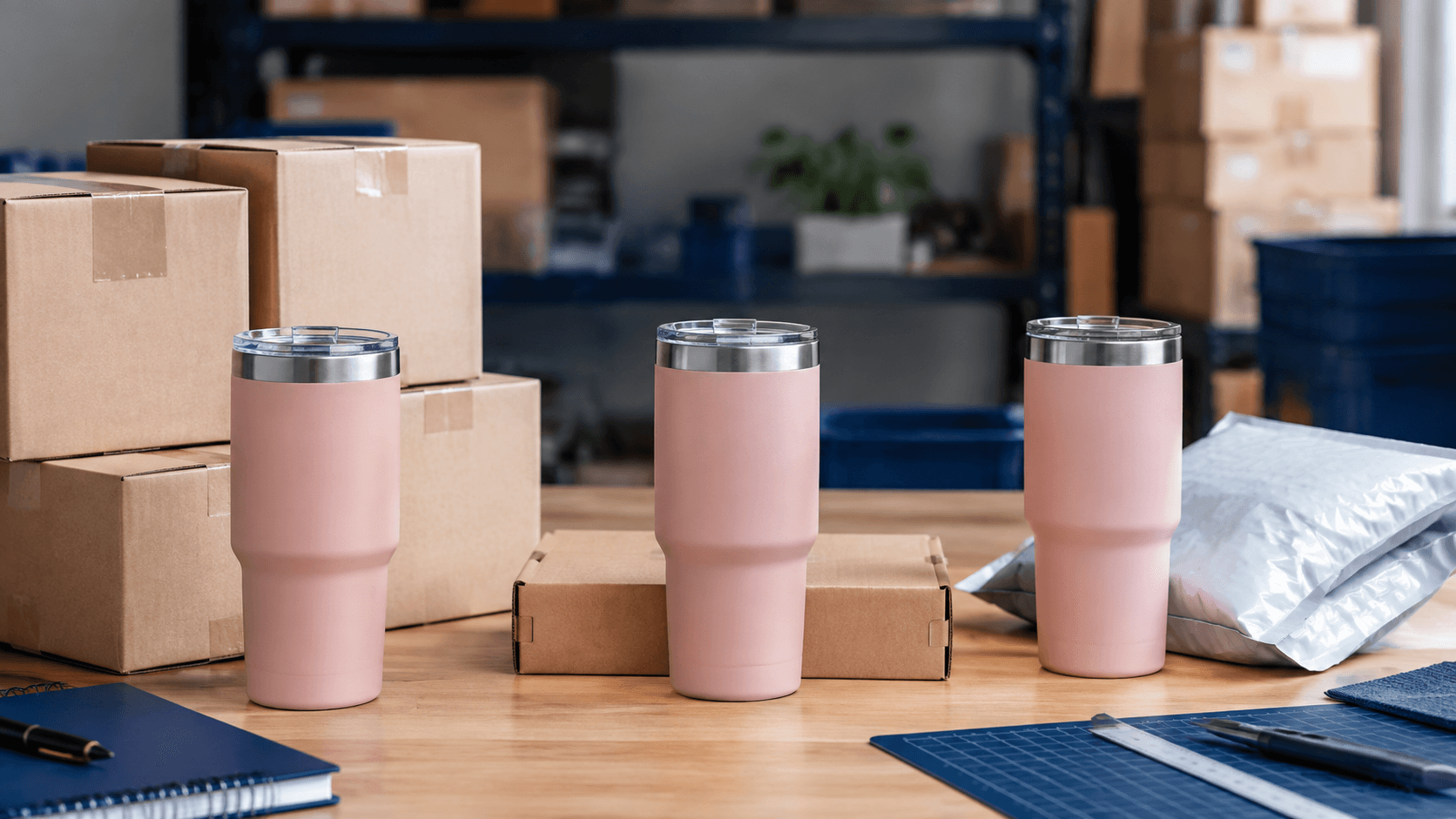
Most dropshipping sellers operate on razor-thin margins. When they look for ways to improve profitability, the first thought is usually "better ads" or "higher conversion." But here’s a truth that doesn’t get enough attention: your profit is often decided before the product ever reaches your customer — at the sourcing stage.
The same product, from the same factory, can travel through three or four different platform layers before it reaches you. A Bluetooth speaker that starts at factory cost on 1688 might carry an export markup on Alibaba, then a retail markup on AliExpress, before finally reaching your store at a price that leaves almost no room for profit.
This guide breaks down the four sourcing options available to overseas sellers in 2026. No platform bashing. No guaranteed riches. Just an honest look at what each channel offers, where it falls short, and which one matches your current stage.
The 30-Second Answer
If you don’t have time to read the full guide:
| Platform | Best For | Price Level | Key Friction |
|---|---|---|---|
| 1688 | Sellers doing 50+ orders/day | Lowest (factory direct) | Language, payment (RMB), MOQ |
| 1688 International | Want to try 1688 without an agent | Medium-low | Limited catalog, weaker support |
| Taobao | Testing unique/small-batch products | Medium | No English, no B2B infrastructure |
| AliExpress | Beginners with zero capital | Highest (retail markup) | Thin margins, slow shipping |
The rule of thumb: Start on AliExpress to validate. Move to 1688 (with an agent) when you’re ready to scale. Use Taobao for hard-to-find items.
The Four Options at a Glance
| Platform | Type | Language | Who It’s Built For |
|---|---|---|---|
| 1688 | Domestic B2B wholesale | Chinese | Chinese businesses buying in bulk |
| 1688 International | Cross-border B2B wholesale | Multi-language APP | Overseas B2B buyers |
| Taobao | Domestic B2C retail | Chinese | Chinese consumers |
| AliExpress | Cross-border B2C retail | English + multi-language | Global retail buyers |
The key difference is not just price. It’s infrastructure. Some platforms were built to serve buyers inside China’s language, payment, and logistics ecosystem. Others were built to serve international buyers — and that convenience usually comes with a markup.
According to Importify’s 2026 supplier analysis, the price gap between factory-direct (1688) and retail platforms (AliExpress) typically ranges from 30% to 70% — a margin difference that can make or break a dropshipping business at scale.
1688: The Factory Floor
1688.com is Alibaba Group’s domestic wholesale marketplace. It launched in 1999 — before Taobao, before AliExpress, even before Alibaba.com became a global name. It connects Chinese factories and wholesalers directly to domestic buyers.
Why experienced sellers still talk about 1688
- Price levels: Because suppliers on 1688 target domestic buyers, they don’t price in export markups, English-language support costs, or trade-fair overhead. According to Ichiba OnePlatform’s Chinese supplier guide, 1688 is best understood as a "scale channel, not a beginner channel" — the prices are lowest, but accessing them requires navigating China’s domestic business infrastructure.
- Product depth: With over 10 million registered suppliers and hundreds of millions of SKUs, the range is vast. Many manufacturers on 1688 have never listed on any international platform.
- Customization potential: Because you’re often talking to factories rather than trading companies, there’s more room for OEM, packaging changes, and spec adjustments.
- Bulk negotiation: When ordering in larger quantities, there is usually significant room to negotiate the unit price down — often 10–30% below the listed price, depending on volume and relationship.
The real barriers
- Language: The platform is almost entirely in Mandarin. Product listings, supplier communication, and dispute resolution all happen in Chinese.
- Account requirements: Registration typically requires a Chinese mainland phone number and verification through Alipay.
- MOQ expectations: Many suppliers expect batch quantities suited to wholesale buyers. That said, most factories on 1688 also keep a small retail stock and are willing to sell 1–2 units — the real MOQ barrier applies when you need custom specs or branding.
- Domestic shipping only: Most 1688 suppliers ship only within China. International buyers need a consolidation warehouse, freight forwarder, or agent.
- Limited buyer protection: Unlike Alibaba.com’s Trade Assurance, 1688 does not offer an equivalent international dispute resolution framework.
1688 International: The 2025–2026 Update
Recognizing that overseas buyers were accessing 1688 through workarounds, Alibaba has rolled out a series of cross-border improvements under the "货通全球" (Global Sourcing) initiative:
- Multi-language APP: The official 1688 APP now offers English and other language interfaces for certain markets.
- International payment options: Through partnerships with cross-border payment providers like Airwallex and WorldFirst, Visa and MasterCard acceptance is now available in select channels.
- Partial cross-border logistics: Some "cross-border Select" products now include logistics support and English product detail pages.
- AI translation tools: AI-powered multilingual customer service and product translation features have been introduced.
What hasn’t changed — and still matters:
Despite these improvements, the core infrastructure remains oriented toward domestic trade:
- Supplier communication is still primarily in Chinese. Even with translation tools, negotiating specs, packaging, lead times, and quality standards remains unreliable for buyers who don’t read Chinese.
- Most suppliers still ship domestically only. The cross-border logistics coverage is partial and limited to select product categories and markets.
- No robust international buyer protection. Quality disputes and fraud recovery remain difficult to resolve from abroad.
- Limited product catalog. DSers’ platform comparison notes that only 10–20% of domestic 1688’s inventory is available on the international version.
- No built-in quality inspection. Unlike export-oriented platforms, 1688 assumes buyers handle their own QC.
Bottom line: Alibaba Group has never clearly defined the positioning difference between 1688 International and AliExpress — and that ambiguity matters. Even if 1688 International’s coverage expands in the future, 1688 (domestic or international) can still be thought of as "another AliExpress dominated by factories," whereas on regular AliExpress, the vast majority of sellers are resellers who source from 1688 in the first place. The core platform remains more accessible than ever for foreign buyers in 2026, but "accessible" doesn’t mean "easy." If you’re placing 5–10 test orders, the new tools might suffice. If you’re scaling to 50+ orders/day, the language, payment, and QC gaps still make a sourcing agent the safer route.
Taobao: The Test Kitchen
Taobao is China’s largest consumer marketplace — essentially the domestic equivalent of eBay or Amazon, but with far more sellers and product variety.
Where Taobao shines
- Single-unit purchases: No MOQ. Buy one item if you want.
- Product diversity: Styles, colors, and variations that don’t always appear on wholesale platforms.
- Better pricing than AliExpress for the same items (usually 10–30% less).
Where it falls short for sellers
- Chinese language interface. No English support. Google Translate works for browsing, but product specs and material descriptions often get mangled.
- Not built for bulk. Sellers aren’t set up for export. Don’t expect invoices, customs documents, or reliable restocking.
- Quality variance. Reviews can be fake. Photos can be stolen. What arrives may not match what you saw.
- IP risk. Taobao is notorious for unlicensed merchandise and gray-market goods. One trademark complaint can get your store banned.
Best for: Testing small quantities for a limited drop or flash sale, or finding a niche product that doesn’t exist on 1688 or AliExpress. In practice, Taobao also serves as a critical backup channel — when 1688 is out of stock on a hot item, sourcing teams routinely turn to Taobao, Pinduoduo (China’s Temu), JD.com, or similar platforms to procure small batches and keep orders flowing. Use it as a supplement, not a primary source.
AliExpress: The International Standard
AliExpress is Alibaba Group’s cross-border retail marketplace. It was built from day one for international buyers, and that shows in every part of the experience.
The clear advantages
- Fully English (and multi-language): Product listings, checkout, customer service, and dispute resolution all available in English and dozens of other languages.
- No MOQ. Buy one piece. Buy ten. Perfect for dropshipping.
- Integrated international logistics: Built-in door-to-door delivery with tracking.
- Mature buyer protection: Payment held in escrow until delivery confirmed.
The trade-offs
- Highest price level: You’re paying retail + platform markup + shipping subsidy baked into the price.
- Thin margins. Everyone is selling the same products from the same suppliers. Price wars are brutal.
- Slow shipping. Importify’s supplier comparison lists AliExpress delivery times at 1–4 weeks for standard shipping, with premium options at 7–15 days. However, the "84.5% delivered within 12 days" statistic often cited by sellers excludes the long-tail of orders that take weeks or months — your customers may be among the unlucky minority who wait.
- "Free Return" is not what it seems. Returns go to AliExpress’s local warehouse, not back to China. No seller in China will ever receive your returned product — shipping from the US to China costs more than the item itself. Returned items are typically liquidated at low prices or destroyed by the warehouse. The customer pays domestic shipping (USPS, etc.) to return the product — a cost they often only discover after initiating the return. Our advice: never return; negotiate a refund or partial refund with the seller instead.
- No branding. Custom packaging is rare. Inserts and thank-you cards are nonexistent.
Best for: Launching your first store with <$500, testing 10–20 products, or when you don’t yet have the order volume to justify an agent.
Side-by-Side Comparison
| Dimension | 1688 | 1688 International | Taobao | AliExpress |
|---|---|---|---|---|
| Price level | Lowest (factory direct) | Lower than AliExpress, fees add up | Medium (retail) | Highest (retail + export markup) |
| MOQ | Most accept 1–2 pcs; bulk pricing requires negotiation | Varies; partial single-unit | No | No |
| Language | Chinese only | Multi-language APP; supplier comms mostly Chinese | Chinese only | English + multi-language |
| Payment | RMB / Alipay | Visa/MC via partners (select channels) | RMB / Alipay | Credit card / PayPal |
| Buyer protection | Limited for foreigners | Limited for foreigners | Limited for foreigners | Strong (Buyer Protection) |
| Product range | Massive (B2B focused) | Limited (~10–20% of domestic) | Massive (C2C/B2C) | Large (curated for export) |
| International shipping | Domestic only; agent needed | Partial; limited coverage | Domestic only; forwarding needed | Integrated global shipping |
| Custom branding | Available at factory level | Available (same supplier base) | Rare | Rare |
| Best for stage | Scaling / brand-building | Experimenting with direct sourcing | Testing / sampling | Starting out / low volume |
The Hidden Costs No One Talks About
Switching platforms isn’t free. Here’s the real math:
1688 Hidden Costs
- Sample fees: ¥50–200 per product to verify quality ($7–$28)
- QC/inspection: $0.30–$0.80 per unit if you hire a third party
- Consolidation + export logistics: $50–$150 per batch
- Payment friction: Currency exchange loss, Alipay top-up fees, potential frozen accounts
- Communication time: Hours of back-and-forth in WeChat/QQ with suppliers who don’t speak English
Taobao Hidden Costs
- Returns are nearly impossible to send back from overseas
- No customs invoices — if your country’s customs asks for documentation, you’re stuck
- Inconsistent restocking — that bestseller might disappear tomorrow with no notice
AliExpress Hidden Costs
- Platform markup is hidden in the price (you’re paying 40–100% more than 1688 — as the pink thermos showed: $2 vs $8.70)
- "Free shipping" illusion — the cost is baked into the product price. Many Welcome Deals display a low product price, but the actual shipping cost for larger orders or heavier items can be far higher than shown
- "84.5% within 12 days" — a clever statistic. The customers who wait weeks or months always fall into "the small percentage"
- "Free Return" deception — products return to a local warehouse, not China. No seller in China will ever receive your returned product — the US-to-China shipping and tariffs exceed the item’s value. AliExpress warehouses typically liquidate returns at rock-bottom prices or destroy them. The customer pays domestic shipping (USPS etc.) to the warehouse, often discovering this cost only after initiating the return. In any case, negotiate a refund with the seller instead of returning
- Refund rate impact — slow shipping and quality issues drive refunds, which hurt your payment processor standing
Real Case Study: The Same Pink Thermos, Three Platforms
Let’s cut the theory. Here’s a real product we sourced — an insulated thermos (pink) — with actual live listing prices as of July 2026:
| Cost Item | 1688 (Listing) | Taobao (Listing) | AliExpress (Listing) |
|---|---|---|---|
| Product price | ¥9.50 (new user price) | ¥16.90 (incl. shipping) | $8.70 (Welcome Deal) |
| Domestic shipping | ¥4.00 | Included | N/A |
| International shipping | ~$10–12/unit (single unit, with tariffs) | ~$10–12/unit (single unit, with tariffs) | Included (to US) |
| Total to US (single unit) | ~$2.00 (goods only) / ~$12–14 (landed) | ~$2.50 (goods only) / ~$12.50–14.50 (landed) | $8.70 (all-in) |
At goods-only level, 1688 looks 4× cheaper than AliExpress. But the goods-only price doesn’t tell the whole story.
What This Example Teaches Us
1688 — Factory-first, lowest price, real limitations
1688 is dominated by factories. You can find factory-direct stock at prices no other platform matches. But DSers’ platform comparison estimates only about 10% of 1688’s inventory has been integrated into the international version. Even with the 2025–2026 improvements (multi-language APP, international payment via Airwallex/WorldFirst, AI translation), communication, payment, and shipping on the international version still aren’t smooth for most overseas buyers.
Taobao — The reliable backup channel
Taobao is China’s mainstream domestic retail platform. Most sellers there are resellers sourcing from 1688 — which is why the Taobao price (¥16.90) is higher than the 1688 factory price (¥9.50). But Taobao plays a crucial practical role: when 1688 runs out of stock on a hot item, we source small batches from Taobao, Pinduoduo (China’s Temu), JD.com, or similar platforms to keep orders flowing.
AliExpress — Welcome Deals are loss leaders, not the real price
The $8.70 Welcome Deal looks straightforward — and for a single cup, it may actually be cheaper than sourcing from 1688. Here’s why: shipping just one insulated cup from China to the US, with tariffs, could cost $10+ on its own. So the true landed cost from 1688 for a single unit could reach $12+, well above the AliExpress Welcome Deal ($8.70).
The key insight is that AliExpress Welcome Deals are loss leaders — sellers deliberately price below cost, absorbing the loss as a customer acquisition expense. They can afford to do this because they expect repeat orders at normal margins. If you try to fulfill multiple ongoing orders from AliExpress at regular (non-Welcome-Deal) prices, the cost is usually far higher than the Welcome Deal suggests.
So the real comparison is not "$2 vs $8.70" — it’s:
- 1 unit: AliExpress Welcome Deal ($8.70 all-in) can be cheaper than 1688 + shipping ($12+ landed)
- 100+ units (consolidated shipping): 1688 ($2–3/unit landed) crushes AliExpress ($8.70+ each)
- 100+ units with bulk negotiation: 1688 unit price drops 10–30% below listed → even wider gap
That said, there are several other things the AliExpress listing won’t tell you:
The delivery time illusion: "84.5% delivered to the US within 12 days" sounds impressive. It’s also a masterful piece of statistics — because the customers who wait weeks or even months for delivery? They always fall into "the small percentage." Most buyers don’t realize how variable AliExpress shipping actually is until they’re the ones waiting.
The "Free Return" trap: This is perhaps the most misleading promise on the platform. Free returns exist primarily to match Amazon’s return policy — but the reality is very different. When you return a product, you’re not sending it back to China. You’re returning it to an AliExpress local warehouse in your country. No seller in China will ever receive your returned product — shipping from the US back to China costs more than the product itself when you factor in tariffs and international freight. What actually happens to returned items? AliExpress warehouses typically liquidate them at rock-bottom prices or simply destroy them.
Here’s what catches buyers off guard: you pay for domestic shipping (USPS, Royal Mail, etc.) to send the product to AliExpress’s local warehouse. Many customers only discover this cost after they’ve initiated the return — and the shipping fee can be higher than the product price itself.
Our strong recommendation: do not return products on AliExpress under any circumstances. Instead, negotiate a full or partial refund directly with the seller. It’s almost always faster, cheaper, and less frustrating.
Decision Guide: Which One Fits Your Stage?
Scenario 1: Just starting out, <50 orders/month
Go with AliExpress. Your priority is validating product-market fit, not squeezing every cent of margin. AliExpress gives you English support, buyer protection, and no MOQ headaches.
Scenario 2: Want to try 1688 without an agent
Consider 1688 International. It’s a legitimate way to access lower prices with reduced friction. But go in with realistic expectations — you’ll hit limitations on selection, customization, and support.
Scenario 3: Established sales, ready to scale
Use 1688 with a sourcing agent. This is where the economics really shift. An agent handles language, QC, consolidation, and shipping — turning 1688’s low prices into actually usable margins. Once you’re consistently moving a few hundred units per month, the math usually flips in your favor.
Scenario 4: Building a brand with custom products
1688 Domestic is the only option. For private label, OEM, packaging customization, or spec modifications, you need factory-direct relationships. Neither Taobao nor AliExpress offers meaningful customization at small scale.
How PT5 Fits In
We don’t claim 1688 is magic. We do claim that the margin difference between AliExpress retail pricing and 1688 factory pricing is real — and that capturing that difference without creating a full-time China operation is possible.
Here’s what we handle:
- Sourcing from 1688 and Taobao: Our team searches, negotiates, and purchases in Chinese, so you don’t have to.
- MOQ bridging: We consolidate orders across multiple clients to meet factory minimums.
- Integrated QC, warehousing, and fulfillment: Goods arrive at our warehouse, pass inspection, get repackaged if needed, and ship directly to your customers.
- Communication: One WhatsApp group, no language barriers.
We’re not the only solution — you can build your own China supply chain, hire a VA, or use other agents. We’re just one option that happens to be transparent about pricing, processes, and what we can and can’t do.
FAQ
Can I buy from 1688 without speaking Chinese?
In 2026, partially yes. The 1688 International APP and AI translation tools help with browsing. But for negotiating MOQs, resolving disputes, and verifying product specs, you still need Chinese language support — or an agent who handles it for you.
Is Taobao safe for dropshipping?
Taobao is safe for small personal purchases. For dropshipping, it’s risky. Sellers aren’t export-oriented, quality is inconsistent, and buyer protection for international orders is minimal. Use it for niche finds, not your core supply chain.
Why is AliExpress more expensive than 1688?
It’s not always — at least not for single units. Our pink thermos case showed that shipping one cup from China to the US can cost $10+ with tariffs, making the 1688 landed cost for 1 unit potentially higher than the AliExpress Welcome Deal ($8.70). But AliExpress Welcome Deals are loss leaders — sellers price below cost to acquire customers. For ongoing orders at regular prices, AliExpress is almost always more expensive because sellers (mostly resellers who source from 1688) add their margin on top. At 100+ units with consolidated shipping and bulk negotiation, 1688’s advantage becomes massive. Also note: the "Free Return" policy on AliExpress isn’t truly free — customers pay domestic shipping to return products to AliExpress’s local warehouse, often without realizing this until after the return is initiated. We strongly recommend negotiating refunds with sellers instead.
Do I need a sourcing agent for 1688?
Not for 5–10 test orders. But for consistent scaling, an agent saves you more than they cost. They handle negotiation, QC, consolidation, and shipping — turning 1688’s low prices into actually usable margins.
Final Thoughts
There is no "best" platform. There is only the platform that matches your current capabilities and business stage.
- AliExpress wins on accessibility. Use it to learn and validate.
- Taobao wins on product diversity. Use it for testing and niche items.
- 1688 International wins as a bridge. Use it to dip your toes into direct sourcing.
- 1688 Domestic wins on margin and customization. Use it when you’re ready to scale.
The sellers who win in 2026 are not necessarily the ones who found the "secret" platform. They’re the ones who matched their sourcing channel to their volume, their risk tolerance, and their operational capacity — and then scaled deliberately.
Switching platforms is not a magic bullet. If your store is struggling because of poor product-market fit or weak branding, cheaper sourcing won’t fix the core problem. But if you’ve already solved those pieces and your margins are being compressed by platform markups, then rethinking your supply chain layer is one of the highest-ROI moves available.
Have Your Say
We don’t claim to have the final word. Sourcing strategies change, platforms evolve, and your experience might be different from ours.
- Disagree with our comparison?
- Found a platform we missed?
- Have a real cost breakdown to share?
Leave a comment below. We read every message and update this guide monthly based on seller feedback.
Last updated: July 2026
Data Sources:
- DSers: AliExpress vs 1688 vs Alibaba Comparison — Platform features and inventory coverage
- Importify: Best Dropshipping Suppliers 2026 — Price gaps and delivery time benchmarks
- Ichiba OnePlatform: Chinese Dropshipping Suppliers Guide — Supplier ecosystem analysis
- 1688.com platform data — Official platform statistics and cross-border service updates
- AliExpress public listings — Live pricing and shipping data
- PT5 internal sourcing logs (anonymized)
Case study listings: 1688 – Pink Thermos ¥9.50 · Taobao – Pink Thermos ¥16.90 · AliExpress – Pink Thermos $8.70
This article was generated with Coze AI.
Cover image: AI-generated illustration of product sourcing channels.

Comments
Have your say. Share practical experience, point out something we missed, or ask a follow-up question.
Loading comments...
Join the conversation
Log in with your PT5 account to comment or vote.
Log in to commentNew to PT5? Create an account